What Kansai Looks Like When the Crowds Go Home
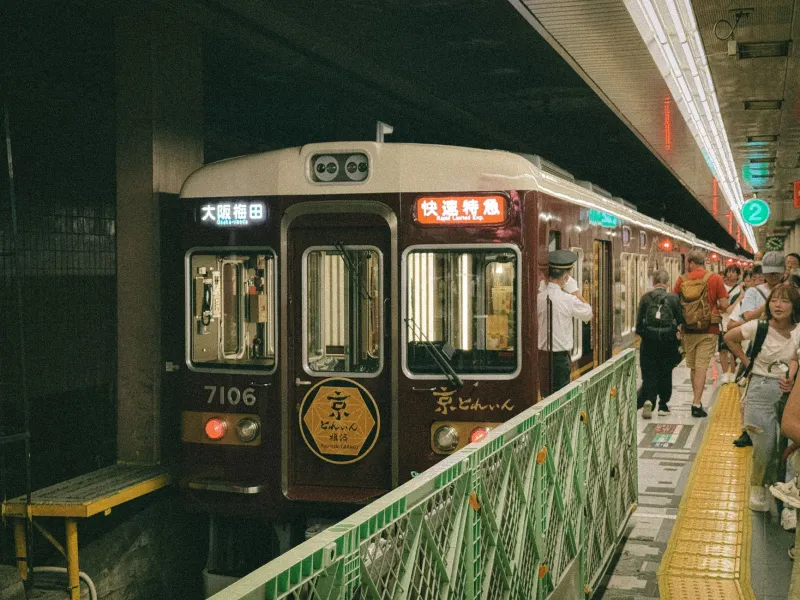
Photo: Hyppolyte de Saint-Rambert, CC BY-SA 4.0, via Wikimedia Commons
Everybody wants Kansai in cherry blossom season. And honestly, who can blame them? The photos are real. The magic is real. But here's the thing nobody mentions on travel forums: the Kansai that sticks with you — the one that changes how you think about travel — usually shows up in February, or mid-June, or a random Tuesday in late November when the tourist calendar has already moved on.
If you've been timing your trips around peak seasons, you've been seeing the highlight reel. The slow seasons? That's where the actual story is.
The Tsuyu Paradox
Japan's rainy season — tsuyu — typically settles over Kansai from early June through mid-July. Ask most Western travelers about it and they'll grimace. Ask a long-term visitor who's been through it, and they'll probably say it was the trip that changed everything.
Here's the thing about tsuyu: it doesn't rain constantly. It rains dramatically, in bursts, and then clears into this heavy, green, impossibly humid stillness that makes Kyoto's temple gardens look like something out of a painting you'd find in a museum you'd never be allowed to touch. The moss at Saihoji — the so-called Moss Temple, which requires advance reservations under any conditions — absolutely peaks during this period. The hydrangeas at Fujinomori Shrine draw a fraction of the crowds that cherry blossoms do, but they're arguably more beautiful.
More importantly, the shrines and temple grounds are quiet. Not empty — locals still move through them — but quiet in the way that lets you actually stand somewhere and feel it. That's a luxury that late March simply doesn't offer.
Accommodation prices drop noticeably during tsuyu. Some ryokan in Arashiyama and Higashiyama that run $300+ a night in April start looking a lot more accessible. That's not a small thing if you're planning a longer stay.
Winter in Kansai Is Underrated in the Best Way
January and February are the other sleeper months. Nara in winter is a completely different animal from Nara in autumn. The deer are still there — they're always there — but the tourists mostly aren't. You can walk the path from Kintetsu Nara Station toward Todai-ji and actually hear your own footsteps. The Great Buddha doesn't get less impressive because it's cold outside.
Kyoto in winter has a particular quality that photographers and artists who spend serious time in the city tend to talk about. The light is low and sharp. The bare trees along the Philosopher's Path turn the canal walk into something almost austere — which, if you've done any reading on Zen aesthetics, is kind of the whole point. Wabi-sabi, the beauty of impermanence and incompleteness, is a lot easier to feel when the scene isn't dressed up in its most Instagram-ready outfit.
Osaka in winter is just Osaka — loud, warm, feeding you constantly — which is its own form of comfort. The covered shotengai shopping arcades in Tennoji and Tanimachi become genuinely cozy places to spend an afternoon when it's cold outside. Nobody's rushing. The takoyaki hits differently when you're actually cold.
What Happens When Locals Have Room to Talk to You
This is the part that's hard to quantify but easy to feel. In peak season, Kansai's hospitality industry is operating at full capacity. Everyone is working hard, everyone is busy, and the interactions you have — while perfectly pleasant — are transactional by necessity. There's a line behind you. There's always a line.
In the slow seasons, that pressure lifts. The woman running the small wagashi shop near Nishiki Market actually has time to explain what she's making and why certain sweets are associated with certain seasons. The monk at a smaller temple in Fushimi might stop and ask where you're from. The izakaya owner in Hozenji Yokocho has room to recommend something you didn't know to order.
None of this is guaranteed, of course. But the conditions for it exist in a way they simply don't when the sidewalks are shoulder-to-shoulder.
One American writer who's been visiting Kansai annually for over a decade put it this way: "The first time I came in November, after the foliage crowds had left, I had a two-hour conversation with a retired schoolteacher at a small shrine in Fushimi. That conversation is why I keep coming back. It couldn't have happened in October."
Late Autumn: The Window After the Window
Speaking of November — the koyo (fall foliage) crowds in Kansai rival cherry blossom season for sheer volume. Tofuku-ji and Eikan-do in Kyoto are genuinely stunning, but they're also genuinely packed. If you can extend your trip even a week past peak color, you'll find that the fallen leaves on the ground are doing their own thing, the gardens have a different kind of beauty, and the crowds have thinned significantly.
Late November into early December is one of the quieter stretches of the year in Kansai, and the temperatures are still manageable. It's worth considering if your schedule has any flexibility.
How to Actually Plan Around the Slow Seasons
A few practical things worth knowing:
Check what's actually open. Some smaller museums and craft studios scale back hours in winter. A quick email or check of their Japanese-language website (Google Translate handles it reasonably well) saves frustration.
Book accommodations earlier than you think. Even in slow seasons, the good ryokan fill up, especially on weekends. "Off-peak" doesn't mean "empty."
Pack for the actual weather. Tsuyu means a quality compact umbrella and shoes that can handle wet stone paths. Winter in Kyoto is colder than most Americans expect — it's not ski-resort cold, but it's not mild either. Layer up.
Adjust your pace. The slow seasons reward slower travel. Build in time to just sit somewhere — a temple garden, a riverside bench in Osaka, a kissaten (old-school coffee shop) in Namba — and let the place come to you a little.
The Version of Kansai Worth Waiting For
Kansai during peak season is worth doing at least once. The cherry blossoms, the autumn leaves, the summer festivals — they're all real and they're all worth experiencing. But if you've already done the highlight reel, or if you're the kind of traveler who'd rather go deep than wide, the slow seasons are where this region actually opens up.
The crowds aren't just a logistical inconvenience. They change the nature of the place. When they thin out, you're not seeing a lesser version of Kansai — you're seeing a different one. Often a better one. Almost always a more honest one.
That's the version locals live in. And it's been waiting for you this whole time.