When 'That's Terrible' Actually Means 'I Love It': Cracking the Kansai Communication Code
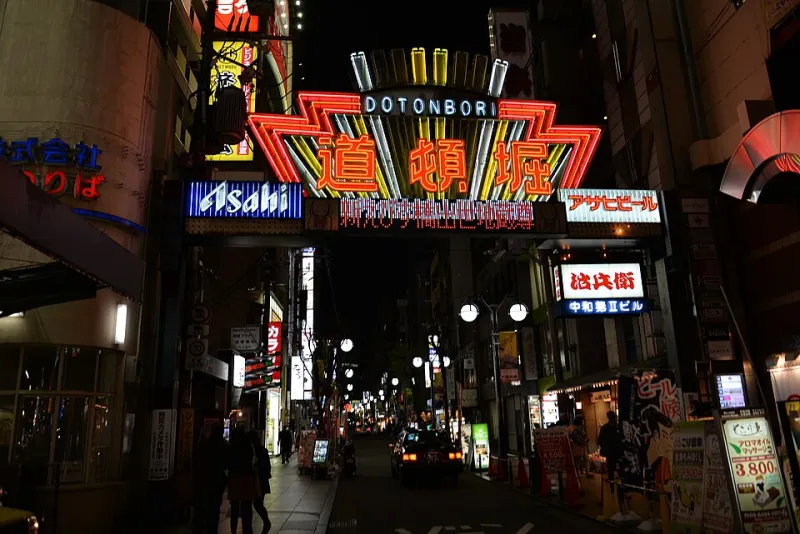
Photo: shankar s., CC BY 2.0, via Wikimedia Commons
You're standing at a takoyaki stall in Namba. You hand one to a local you've been chatting with, and they pop it in their mouth, wince dramatically, and announce, "Aho ya na, umai!" — something roughly translating to "You idiot, this is delicious." You have no idea whether to say thank you or apologize.
Welcome to Kansai-ben.
The Kansai dialect isn't just a regional accent the way, say, a Southern drawl differs from a New England clip. It's a whole separate emotional grammar — one where affection sounds like teasing, criticism sounds like praise, and a well-timed insult is basically a hug. For American visitors used to taking words at face value, this can be genuinely disorienting. But once you crack the code, you'll realize Kansai locals aren't being rude. They're actually letting you in.
The Tsukkomi Reflex: Why Kansai People Push Back When They Like You
If you've ever watched Japanese stand-up comedy — manzai, specifically — you've already seen Kansai communication in action. The classic manzai duo has a boke (the goofy one) and a tsukkomi (the straight man who calls out the nonsense, usually loudly). That dynamic didn't come from nowhere. It came from Osaka.
In Kansai culture, the instinct to poke fun, push back, and call something out is a form of engagement. When a shopkeeper in Kyoto's Nishiki Market laughs at your pronunciation and mimics you back, that's not mockery — that's an invitation. They're playing with you, which means they've decided you're worth playing with. In Tokyo, a stranger might smile politely and let a mistake slide. In Osaka, they'll correct you with a grin and a dramatic sigh, and that means you've made a friend.
The key signal to watch for: eye contact and energy. When Kansai people are genuinely annoyed or dismissive, they go quiet and flat. When they're teasing you affectionately, there's a whole performance to it. The louder and more theatrical the ribbing, the warmer the feeling behind it.
"Meccha Kowai" and Other Phrases That Will Confuse You
Let's talk vocabulary, because some Kansai-ben words carry emotional weight that doesn't map cleanly onto standard Japanese — let alone English.
Aho (アホ): In Tokyo, baka (idiot) is a genuine insult. In Kansai, aho is used constantly between friends, often as a term of almost fond exasperation. Hearing a grandmother call her grandkid an aho for spilling something is about as threatening as an American grandparent saying "you knucklehead." Context matters enormously, but default to warmth unless the energy in the room says otherwise.
Meccha (めっちゃ): This one's easy — it just means "very" or "super." Meccha umai is "super delicious." Meccha tanoshii is "so much fun." You'll hear it about forty times a day in Osaka and it's one of the most useful words you can pick up.
Nandeyanen (なんでやねん): Literally "why on earth" or "what are you talking about," this is the verbal equivalent of a tsukkomi slap. It's used to call out something absurd or unexpected — and it's almost always affectionate. If someone hits you with a nandeyanen after you say something, congratulations. You've been funny enough to warrant a response.
Akan (あかん): Means "no good" or "that won't work." Blunter than the standard Japanese dame, and used far more casually. Don't panic if someone says akan about your restaurant choice. They're probably about to suggest somewhere better.
The Directness Isn't Rudeness — It's Respect
Here's the cultural underpinning that makes all of this make sense: Kansai people, particularly Osakans, place a high value on honesty as a form of respect. The idea of giving someone a polished non-answer to spare their feelings — something that happens frequently in more formal Japanese social contexts — can feel, to a Kansai local, almost condescending. If they tell you your Japanese is rough, they're not trying to embarrass you. They're treating you like someone who can handle the truth and do something with it.
This also explains why Kansai merchants have a reputation for haggling, joking, and generally making the transactional feel personal. In Osaka's Kuromon Market or the covered shopping arcades of Shin-Sekai, a vendor who teases you about overpaying for something at another stall isn't being competitive. They're starting a conversation. They want the exchange to be fun.
For Americans who grew up in service cultures built around cheerful but impersonal politeness — think big-box retail, chain restaurants — this can feel startling at first. Lean into it. Laugh back. Make a joke about your own confusion. That's the correct move.
Reading Genuine Upset vs. Affectionate Bluntness
Okay, so not every sharp word is a compliment in disguise. Here's how to tell when something has shifted.
Tone drops, not rises. Kansai teasing is energetic. Genuine frustration tends to go lower and quieter, not louder. If someone's voice flattens out and the performance disappears, pay attention.
The smile test. Even when Kansai people are being most aggressively playful, there's usually a smile involved — even a suppressed one. If the smile is completely gone and the eye contact has gone cold, you've moved out of banter territory.
Silence as a signal. This one surprises a lot of visitors. In a culture where people are usually verbally expressive, a sudden withdrawal into polite silence is actually one of the clearest signs that something's wrong. It's the social equivalent of a door closing.
When in doubt, a simple sumimasen (excuse me / I'm sorry) goes a long way. Kansai people are generally quick to move on from small friction — they're not ones to hold a grudge over a miscommunication.
How to Actually Use This on Your Trip
You don't need to become a fluent Kansai-ben speaker to connect with locals. But a few small moves will go a long way:
- Laugh at yourself first. When you mispronounce something or make a cultural misstep, own it with a smile. This signals you're not fragile, which opens the door to real interaction.
- Throw in a meccha. Drop it naturally — meccha oishii when the food is good, meccha tanoshii at the end of a fun experience. Locals will light up.
- Match the energy. If a shopkeeper or guide is being playful and theatrical, don't respond with stiff politeness. Play back. Kansai people love a good back-and-forth.
- Don't over-apologize. Constant apologizing reads as awkward rather than polite in this context. A single sincere sumimasen is worth ten nervous ones.
Kansai-ben is, at its core, a communication style built around connection. The teasing, the bluntness, the theatrical complaints — they're all ways of saying I see you, I'm paying attention, you're worth engaging with. Once you stop translating the words and start reading the energy, you'll realize Kansai locals have been welcoming you the whole time. You just needed a little help hearing it.