Your Most Underrated Cultural Stop in Kansai Is Literally on Every Corner
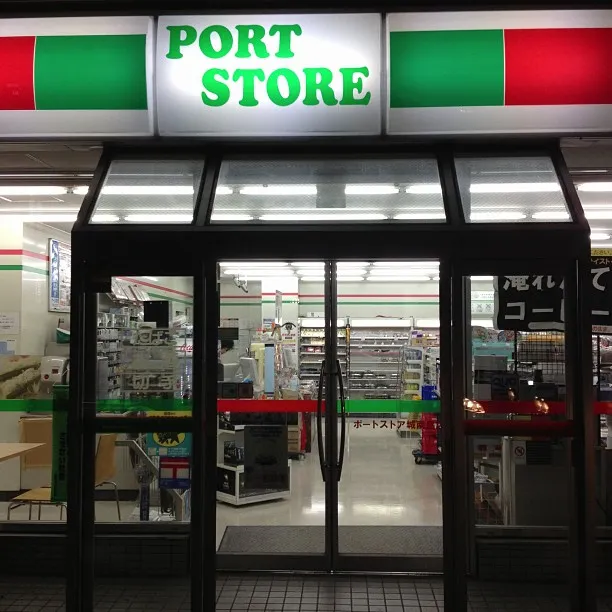
Photo: se7en, CC BY 2.0, via Wikimedia Commons
Let's be honest: when you're planning a trip to Osaka or Kyoto, "visit a convenience store" is not on your bucket list. You're thinking about ramen, temples, maybe a ryokan if you're feeling fancy. The glowing FamilyMart sign on the corner barely registers.
That's a mistake.
Japan's konbini — shorthand for convenience store — isn't a gas station snack aisle with better lighting. It's a finely tuned social institution, and in Kansai specifically, it's one of the most honest windows into everyday Japanese life you're going to find. Skip it and you're essentially skipping a chapter of the place.
What Even Is a Konbini, Really?
Think of it this way: imagine if your local 7-Eleven also had a hot food counter, a working ATM that accepts foreign cards, a fax machine, a place to pay your utility bills, fresh flowers, and a surprisingly decent bottle of sake — all staffed by someone who will bow to you when you walk in and again when you leave.
That's a konbini. And in Kansai, there's roughly one on every significant corner. Osaka alone has more konbini per capita than almost any city in Japan. They are not a convenience. They are infrastructure.
The big three you'll encounter are 7-Eleven (known in Japan as Seven-Eleven), Lawson, and FamilyMart. Each has its loyalists, its signature items, and yes, its own subtle personality. Lawson tends to skew slightly more premium — their "Uchi Café" dessert line is legitimately good. FamilyMart has a cult following for their chicken. Seven-Eleven is widely considered to have the best sandwiches and onigiri game. This is the kind of debate Kansai locals have with genuine conviction.
The Seasonal Shelf Is Basically a Calendar
One of the first things you'll notice if you slow down and actually look is that the product lineup changes constantly. Not just week to week — sometimes day to day. Japan's konbini culture is deeply tied to the concept of kisetsukan, or seasonal feeling. Stores stock sakura-flavored everything in spring, cold noodle variations through summer, chestnut and sweet potato products in fall, and hot oden (a simmered comfort food that lives in a special heated tray near the register) from about October onward.
For a traveler, this is genuinely useful navigation. Walk into a Kansai konbini in late March and the sakura mochi on the counter tells you exactly where you are in the local cultural calendar. It's not just cute — it's the store syncing itself to what people are feeling and craving right now. That's a kind of cultural attunement that's worth pausing to appreciate.
Kansai Shelves Look a Little Different
Here's something most tourists don't realize: konbini stock isn't fully uniform across Japan. Regional managers have real input into what gets shelf space, and Kansai's preferences show up clearly if you know what you're looking at.
Takoyaki-flavored snacks? Far more common here than in Tokyo. Kushikatsu seasoning chips? Absolutely an Osaka thing. You'll find more Kansai-style dashi (lighter, more kelp-forward) in the instant noodle section than you would in a Tokyo store. Local beverage brands like Suntory — headquartered in Osaka — tend to have stronger placement. Even the onigiri fillings lean regional: ume (pickled plum) and kombu (kelp) are staples here that might be harder to find as prominently in the Kanto region.
Wander the snack aisle with that lens and it becomes a little geography lesson. The shelves are essentially a map of local taste.
The Hot Food Counter Deserves Your Full Attention
Americans tend to be suspicious of gas station food. Understandable. But the steam case at a Japanese konbini counter is not that. The nikuman (steamed meat buns), the karaage chicken, the corn dogs, the croquettes — these are fresh, rotated frequently, and honestly pretty great at 11pm when your other options are limited.
In Osaka especially, late-night konbini eating is a completely legitimate activity. You'll see salarypeople, students, and the occasional tourist all standing outside a FamilyMart on a Tuesday night eating croquettes out of a paper bag. This is not a sign of failure. This is participation.
If you're trying to eat like a local on a budget, a konbini hot food run plus a cold Asahi from the refrigerator case is a perfectly respectable dinner. Nobody's judging you. If anything, you look like you know what you're doing.
The Layout Itself Is Trying to Tell You Something
Spend five minutes observing how a konbini is organized and you'll start to pick up on the logic. Beverages along the back wall (forces you to walk the whole store). Register-adjacent displays for impulse items — seasonal sweets, new snack launches, whatever the store is pushing that week. The onigiri section is almost always near the entrance, because onigiri is a daily staple, not an impulse buy. People know what they want.
This layout isn't arbitrary. It's been A/B tested and refined over decades. And it reflects something true about how Japanese convenience culture works: efficiency is a form of respect. The store is designed so you can get in, find what you need, and get out without friction. That same value — smooth, frictionless, considerate — shows up everywhere in Kansai life once you start looking for it.
A Few Practical Notes for First-Timers
The ATMs at 7-Eleven locations in Japan reliably accept foreign cards and offer English menus. This is not true of every bank ATM you'll encounter, so bookmark this fact.
You can eat inside most konbini — there's usually a small counter or a few seats near the window. It's completely normal to use it.
If you buy something hot at the register, they'll ask if you want it warmed up (atatamemasu ka?). Yes. The answer is always yes.
And if you're looking for a late-night snack after the izakayas close and you're somewhere between Namba and Shinsaibashi, just follow the fluorescent glow. It'll take care of you.
The Point Isn't the Snacks
Well, okay — the snacks are great. But the real reason to treat a konbini stop as a genuine cultural experience is that it shows you something temples and tourist maps can't: how ordinary life actually runs here.
The precision of the layout, the seasonal sensitivity of the stock, the regional quirks in the flavors, the quiet efficiency of every transaction — it's all Kansai in miniature. And it's hiding in plain sight behind a sliding glass door on a street you'd otherwise walk right past.
Next time you're in Kyoto or Osaka and you see that familiar glow, stop in. Grab an onigiri. Look around slowly. You're not killing time. You're doing fieldwork.