Your Most Underrated Cultural Stop Glows Under Fluorescent Lights at 2 a.m.
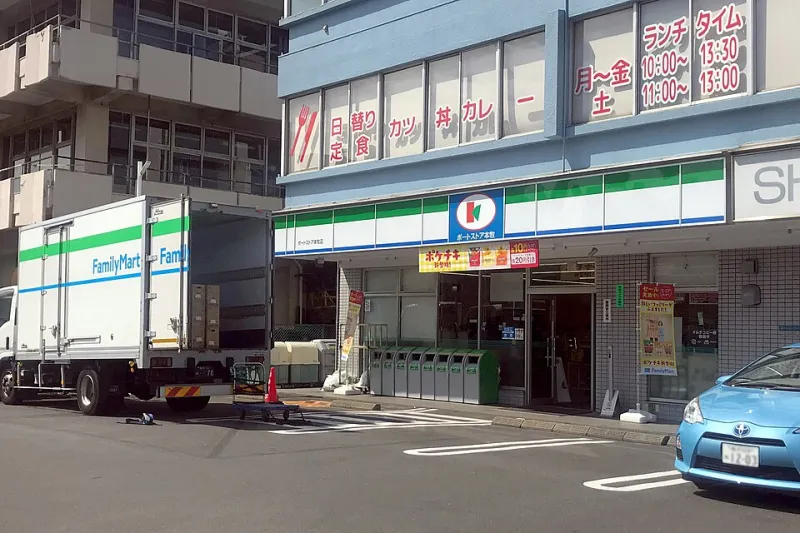
Photo: Yoh-Plus, CC BY 4.0, via Wikimedia Commons
Let's be honest: you didn't fly to Kansai to stand in a FamilyMart at midnight eating a triangle of rice wrapped in seaweed. And yet, here you are. And somehow it's one of the best moments of your trip.
That's not an accident. Japan's convenience stores — called konbini — are a genuine institution, and in Kansai specifically, they function as something closer to a neighborhood living room than a gas station snack stop. If you've been treating them purely as emergency meal depots, you're leaving one of the region's most honest cultural experiences completely on the table.
What Konbini Actually Are (Hint: Not 7-Eleven)
The brand names are familiar — 7-Eleven, FamilyMart, Lawson — but the experience is something else entirely. These stores operate 24 hours, stock freshly made food updated multiple times daily, offer utility bill payments, ATMs that actually work with foreign cards, and a rotating seasonal menu that would make some American restaurants envious.
In Kansai, the konbini is woven into the rhythm of daily life in ways that go well beyond convenience. Salarymen grab onigiri before the first train. Students camp in the back corner with canned coffee during exam season. Elderly neighbors stop in not just to shop but to chat with the staff they've known for years. You are, without realizing it, stepping into a social ecosystem every time you push through that sliding glass door.
The Kansai Difference Is Real
Here's something that surprises a lot of visitors: konbini offerings genuinely vary by region, and Kansai has its own flavor — literally. Osaka-area stores are more likely to stock takoyaki-seasoned snacks, kushikatsu flavored chips, and regional riffs on classics you won't find in Tokyo. Kyoto locations near traditional neighborhoods sometimes carry wagashi (Japanese sweets) and matcha-flavored everything that leans harder into the city's cultural identity.
Seasonal items rotate aggressively. Visit in autumn and you'll find sweet potato lattes, chestnut-filled pastries, and limited-edition packaging that treats the changing seasons with the same seriousness your local Whole Foods reserves for pumpkin spice. In winter, oden — a simmered hot pot dish served from a counter near the register — becomes a fixture. In summer, the freezer section expands to a near-religious scale.
This isn't just product marketing. It reflects how deeply Japanese culture tracks the seasons, a concept called kisetsukan, and konbini are one of the most accessible places to feel that rhythm without needing a reservation or a translator.
What to Actually Buy (A Practical Field Guide)
If you're standing in front of the food section feeling overwhelmed, here's a starting point:
Onigiri — The triangular rice balls near the register are a genuine art form. The packaging has a three-step opening sequence that will humble you the first time. Tuna mayo and salmon are crowd-pleasers; mentaiko (spicy cod roe) is worth trying if you're feeling bold.
Hot foods counter — Fried chicken (kara-age), steamed buns, and corn dogs sit under heat lamps near the register. In Kansai, the chicken tends to be seasoned with a soy-garlic profile that's noticeably different from what you'll find in eastern Japan.
Canned and bottled coffee — The Boss brand canned coffee, sold cold or warm depending on the season, is a rite of passage. It's stronger and sweeter than what you're probably used to, but it pairs perfectly with standing outside at 7 a.m. watching Osaka wake up.
Seasonal limited editions — Whatever the current season is pushing, try at least one. These items exist for weeks, sometimes days. They are the konbini's version of a local event.
Desserts — The chilled dessert section, usually a glass case near the back, is genuinely impressive. Pudding cups, strawberry shortcake slices, and matcha roll cake are consistent standouts.
When Locals Actually Shop
Timing matters. Early morning — roughly 6 to 8 a.m. — is when fresh stock hits the shelves and the breakfast crowd moves through. This is a good window if you want to observe the actual commuter ritual: efficient, quiet, purposeful. Staff are restocking; regulars grab their usual without much deliberation.
Late night, especially after 10 p.m., brings a different crowd — younger, more relaxed, sometimes a little rowdy in the good way. Near university areas in Osaka or the student neighborhoods of Kyoto, late-night konbini runs have their own social texture. People linger. Groups debate which snack to split. It feels less transactional.
Midday is functional and fast. If you're trying to observe rather than participate, early morning or late night gives you more to work with.
The Staff Dynamic Is Worth Noticing
Konbini staff in Japan operate under a specific service protocol — greetings when you enter, a scripted checkout exchange, and a level of precision that can feel almost theatrical if you're not used to it. In Kansai, though, there's often a subtle loosening of that formality. The Osaka personality — warmer, more direct, quicker to joke — bleeds into customer interactions in ways that feel genuinely different from the more reserved Tokyo konbini experience.
Don't be surprised if a cashier in Namba makes a small comment about your purchase or cracks a dry observation. It's not unprofessional; it's regional character.
The Deeper Point
Tourist infrastructure in Kansai is excellent. You can spend two weeks hitting every major temple, castle, and food market and leave feeling like you saw the region. But the konbini offers something those experiences can't quite replicate: the completely unperformed version of daily Japanese life, running on a schedule that has nothing to do with tourism.
The woman buying dinner for one at 9 p.m. after a long shift. The high schooler deliberating for four minutes over which pudding to get. The older man heating his oden at the self-serve counter like he's done it a thousand times. These are the moments that stick, and they cost you exactly as much as a rice ball and a canned coffee.
Next time you walk past a FamilyMart, slow down. Go in without a plan. Let yourself get a little lost in the seasonal snack aisle. You're not just grabbing lunch — you're reading a city.