Why the 'Messy' Parts of Kansai Are Exactly What American Travelers Actually Need
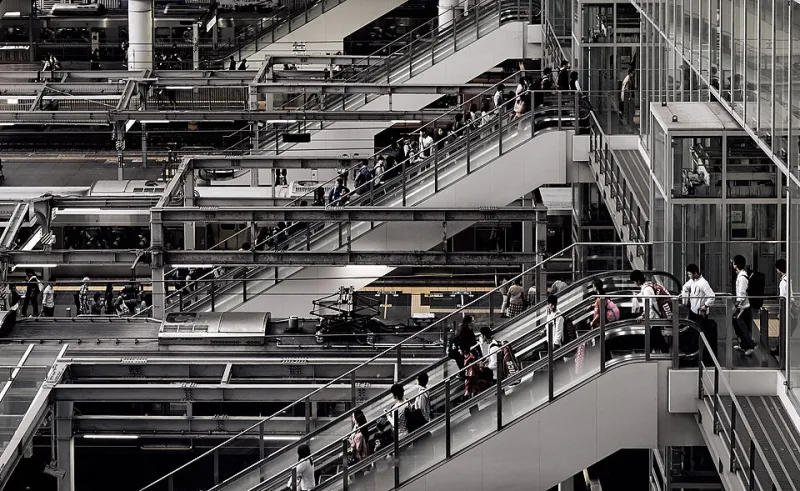
Photo: Pedro Szekely from Los Angeles, USA, CC BY-SA 2.0, via Wikimedia Commons
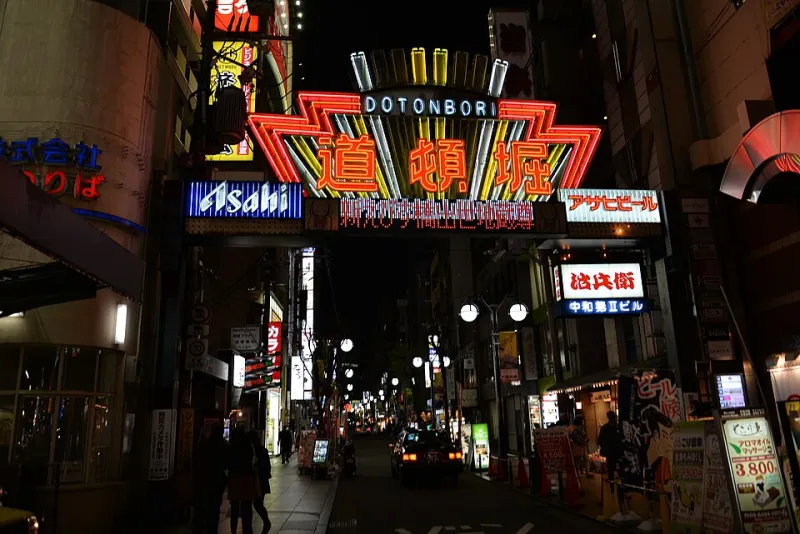
Most Americans arrive in Japan braced for perfection. They've seen the videos — the bullet trains timed to the second, the immaculate convenience store onigiri, the bowing and the quiet and the extraordinary, almost theatrical order of it all. And a lot of that is real. But then they land in Osaka, wander into a covered shopping arcade in Kyoto, or stumble into an argument between a ramen shop owner and a regular customer in Kobe — and something shifts.
Kansai doesn't quite play by the rules that Japan's reputation was built on. And weirdly, for a lot of Western visitors, that's the moment the trip actually starts.
The Perfectionism Trap Nobody Warns You About
Here's a thing that happens more than you'd expect: travelers spend months planning a Japan trip, arrive with a color-coded itinerary, and spend the first few days feeling vaguely anxious. Not because anything goes wrong — but because everything goes so right that there's no room to breathe. When every train is on time, every interaction is polished, and every tourist site is exactly where Google Maps says it'll be, the experience can start to feel a little like walking through a very beautiful simulation.
Kansai disrupts that. Not aggressively — nobody's going to yell at you or leave you stranded — but the region operates with a kind of comfortable looseness that the rest of Japan doesn't always share. Locals talk to strangers. Shopkeepers give unsolicited opinions. The alley you were sure was a dead end turns out to lead somewhere genuinely interesting. The signage at a mid-sized train station is half in English and half inexplicably not, and you figure it out anyway.
That friction? It turns out to be the good stuff.
Kansai's Unofficial Motto: 'Close Enough Is Fine'
There's a cultural concept that gets thrown around in discussions of Kansai called ii kagen — loosely translated, it means something like "good enough" or "just right," though it carries a deliberate embrace of imprecision that's almost philosophical. In Tokyo, this phrase can carry a slightly negative connotation, implying carelessness. In Osaka and the surrounding region, it's practically a lifestyle.
For American travelers, especially those from big cities used to either rigid schedules or total improvisation, this attitude hits differently. It's not laziness. It's a collective agreement that rigid perfection isn't always the point. The ramen doesn't have to arrive in exactly seven minutes. The festival route doesn't have to be roped off and marshaled. The conversation with the guy at the next table doesn't have to stay polite and surface-level.
This is, when you think about it, closer to how a lot of Americans actually like to travel — with room for something unexpected to happen.
The Stranger Who Becomes a Character in Your Story
One of the most consistent things you'll hear from US visitors who've spent time in Kansai is that they ended up somewhere or doing something that was never on their list — because a local sent them there. A grandmother at a bus stop in Nara who insisted you were going the wrong way (you were). A bar owner in Osaka's Namba neighborhood who closed early so he could personally walk you to the izakaya he thought you'd like better. A monk at a Kyoto temple who, when you asked a polite question, sat down and talked for forty-five minutes.
This kind of thing doesn't happen as often in regions of Japan where social interaction with strangers is more guarded. Kansai has a reputation — earned, locals will tell you proudly — for directness, warmth, and a genuine curiosity about who you are and where you came from. The word nosy doesn't quite capture it. Interested is more accurate.
For American travelers, who are often themselves pretty comfortable with striking up a conversation, this creates an opening. You don't have to feel like an intruder. In Kansai, your presence as a foreigner is often treated less as an awkward anomaly and more as a conversational opportunity.
Getting Lost Is Part of the Navigation
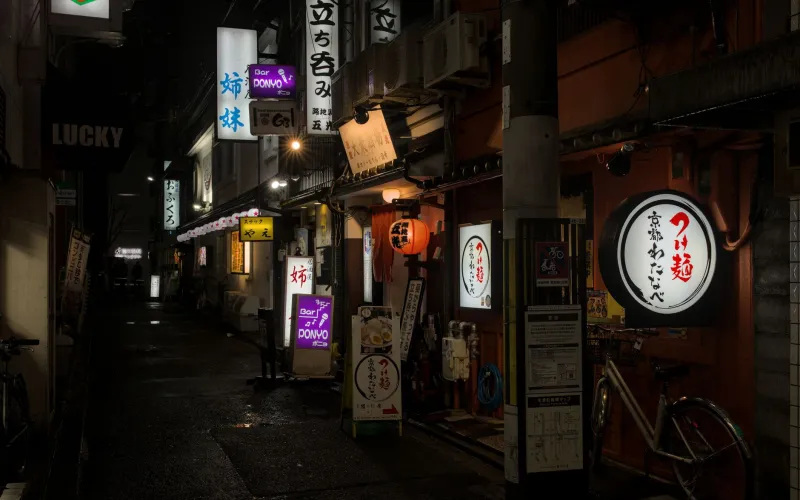
Kansai's older neighborhoods — the backstreets of Kyoto's Fushimi district, the tangle of lanes around Osaka's Shinsekai, the hillside paths above Kobe — were not designed with GPS in mind. They evolved. They bend, dead-end, loop back, and occasionally deposit you somewhere you didn't know existed but are now very glad you found.
American cities, for all their grid logic, have their own version of this — the unexpected block in New Orleans, the alley bar in Chicago, the block in Brooklyn that feels like it belongs to a different decade. Kansai activates that same instinct. The willingness to be slightly lost, to trust that the next corner will reveal something, is a travel skill — and Kansai rewards it more consistently than almost anywhere else in Japan.
The incomplete signage, the streets that change names mid-block, the temple that isn't on any major list but has a garden that makes you stop walking — these aren't failures of infrastructure. They're invitations.
Why 'Authentic' Isn't a Checklist Item
Travel content has spent years promising authenticity while quietly packaging it into something safe and repeatable. Kansai resists that. The region is too dense with actual living — too many working markets, neighborhood festivals, multi-generational businesses, and opinionated locals — to be easily curated into a highlight reel.
What that means for US visitors is that the most memorable moments here tend to be the unplanned ones. The detour that took forty minutes longer than expected. The meal you ordered by pointing at something you couldn't read. The festival you wandered into on a Tuesday afternoon because the street was suddenly full of lanterns.
None of that requires a special pass or a booking confirmation. It just requires showing up with a little flexibility and a tolerance for not knowing exactly what comes next.
Kansai will handle the rest.