Saying No in Kansai Without Blowing Up the Room
Photo: polite Japanese conversation at izakaya Osaka, via upload.wikimedia.org
Let's be honest: most American travelers heading to Japan have heard some version of the same warning. Don't say no directly. Avoid confrontation. Read between the lines. And while that advice isn't entirely wrong, it's also not the full picture—especially once you get to Kansai.
Osaka, Kyoto, Kobe, Nara—these cities operate on a social frequency that's noticeably different from Tokyo. Kansai folks have a reputation for being warmer, louder, and yes, more direct. That means the art of declining something here has its own flavor. You don't need to become a master of vague non-answers. You just need to understand when a firm-but-friendly "no" lands well, when a softer approach is called for, and what to actually say in both cases.
Why Kansai Is Not Tokyo When It Comes to Refusal
In Tokyo, social interactions tend to follow a more formal script. Declining something often involves layers of indirection—people may say chotto (meaning "a little" but functioning as a polite brush-off) and leave it at that, expecting you to understand. Push back with a direct question and you might get an awkward silence.
Kansai is different. The dialect itself—Kansai-ben—is punchier, more expressive, more comedic. Locals here are used to banter. They're used to people saying what they mean, at least somewhat. That doesn't mean bluntness is always welcome, but it does mean you have a bit more room to be clear about what you want without everyone in the room feeling like you've committed a social crime.
That said, how you frame a refusal still matters enormously.
Declining Food: The Most Common Situation You'll Face
You're at an izakaya with a local contact, or maybe a homestay host has set out a dish you genuinely cannot eat. This is probably the most common situation where American travelers feel paralyzed.
Here's the good news: declining food in Kansai is not automatically rude. What matters is how you do it.
Phrases that work:
- Sumimasen, chotto... allergī ga arimashite — "Excuse me, I have a slight allergy to..." Even if it's not technically an allergy, this framing is widely understood and accepted.
- Onaka ga ippai de... — "I'm already full..." followed by a slight bow and a look of genuine regret. The trailing de softens it into an apologetic explanation rather than a flat refusal.
- Arigatō gozaimasu, demo ima wa chotto... — "Thank you so much, but right now it's a little..." and then trail off. In Kansai, this kind of sentence is often understood without needing to be finished.
What you want to avoid is a straight-up iya (no) or iranai (I don't want it). Those land hard even among friends. The goal is to make your host feel like the food sounds great—it's just circumstances, not their cooking, standing in the way.
Turning Down an Invitation
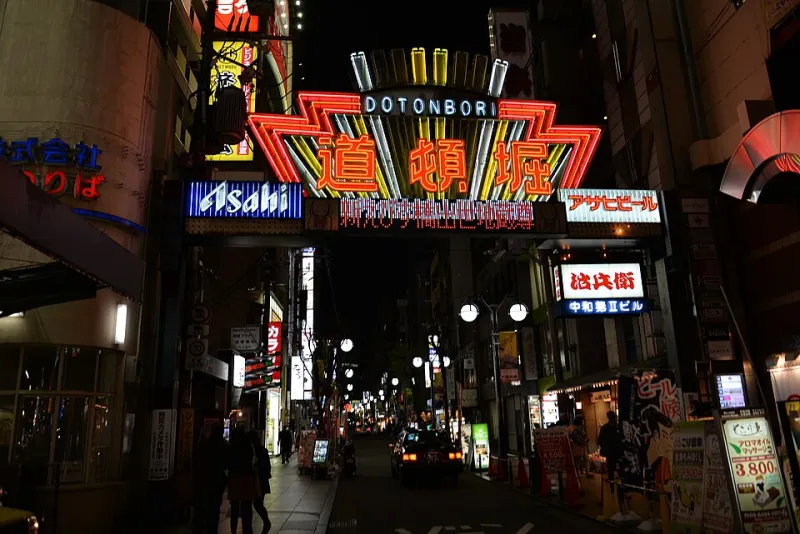
You've made a connection with someone at a bar in Namba or a craft market in Kyoto, and they've invited you to join them somewhere you genuinely don't want to go. Or maybe you're just exhausted and need to tap out.
Kansai people, especially in Osaka, often appreciate a bit of humor here. If you can frame your refusal with a self-deprecating joke—Watashi wa mō genkai desu! ("I've hit my limit!") paired with a laugh—you're likely to get a warm response rather than an awkward one.
More formal situations call for a different approach:
- Sono hi wa chotto tsugō ga warukute... — "That day is a little inconvenient for me..." This is the go-to in most contexts. It's vague enough to be polite but clear enough to be understood as a no.
- Zannen desu ga... — "It's a shame, but..." followed by any reasonable excuse. The zannen (regret) opener signals that you genuinely wish things were different, which is exactly what your host needs to hear.
One thing to watch: if someone invites you to something a second or third time after you've already declined, that's a signal they really mean it. In Kansai culture, the first invitation is sometimes almost reflexive—a social nicety. The second one is real. Knowing the difference helps you decide whether to keep deflecting or just say yes.
Body Language Matters as Much as Words
In any refusal, your physical delivery carries at least as much weight as the words. A few things that read well in Kansai:
The slight bow with a hand wave. Bowing forward slightly while gently waving one hand in front of your face is universally understood as a polite "no thank you." It's warm, it's clear, and it's completely appropriate in casual settings.
The apologetic smile. Not a grin—more of a soft, slightly pained expression that says I wish I could, I really do. This communicates regret, which is the emotional note you want to hit.
Eye contact calibration. Americans tend to hold eye contact as a sign of sincerity. In Kansai, brief eye contact followed by a glance downward while bowing reads as respectful and genuine. Holding someone's gaze while declining can accidentally come across as confrontational.
When Saying No Might Actually Hurt Feelings
There are situations where even a perfectly phrased refusal is going to sting a little—and it's worth knowing about them in advance.
If someone has cooked for you personally, declining to try even a small amount of the food can feel like a rejection of their effort and care. In this case, try to taste at least something, even if it's a tiny portion. If you truly cannot eat it, lead with dō shite mo taberarenakute ("I truly cannot eat it") and look genuinely distressed about the situation. That level of sincerity usually lands with grace.
Similarly, if someone has gone out of their way to arrange an experience for you—a private tour, a reservation they pulled strings for—declining it entirely will hurt regardless of how you phrase it. If you're in that situation and something has come up, try to reschedule rather than cancel outright. Betsu no hi ni dekimasu ka? — "Could we do it on another day?" goes a long way.
A Few Kansai-Specific Phrases Worth Keeping in Your Back Pocket
- Ōkini, demo ēwa — Osaka dialect for "Thanks, but I'm good." Warm, local, and almost always gets a smile.
- Kekko desu — A polite but firm "I'm fine" that works in formal situations. Use it when someone is being very persistent.
- Mō juubun itadakimashita — "I've already had plenty, thank you." Perfect for the end of a meal when dishes keep coming.
The Bottom Line
Saying no in Kansai isn't the minefield some travel guides make it out to be—but it's also not as casual as it is back home. The sweet spot is somewhere between American directness and Japanese indirection: clear enough that people understand you, warm enough that they don't feel dismissed.
Get comfortable with the apologetic smile, learn a phrase or two in Kansai-ben, and remember that in this part of Japan, a little self-deprecating humor goes a long way. Your hosts aren't looking for perfection—they're looking for genuine effort. Show them that, and you'll navigate even the trickiest social moments with your relationships intact.