Broken Clocks and Better Trips: What Kansai's Glorious Imperfection Actually Teaches You
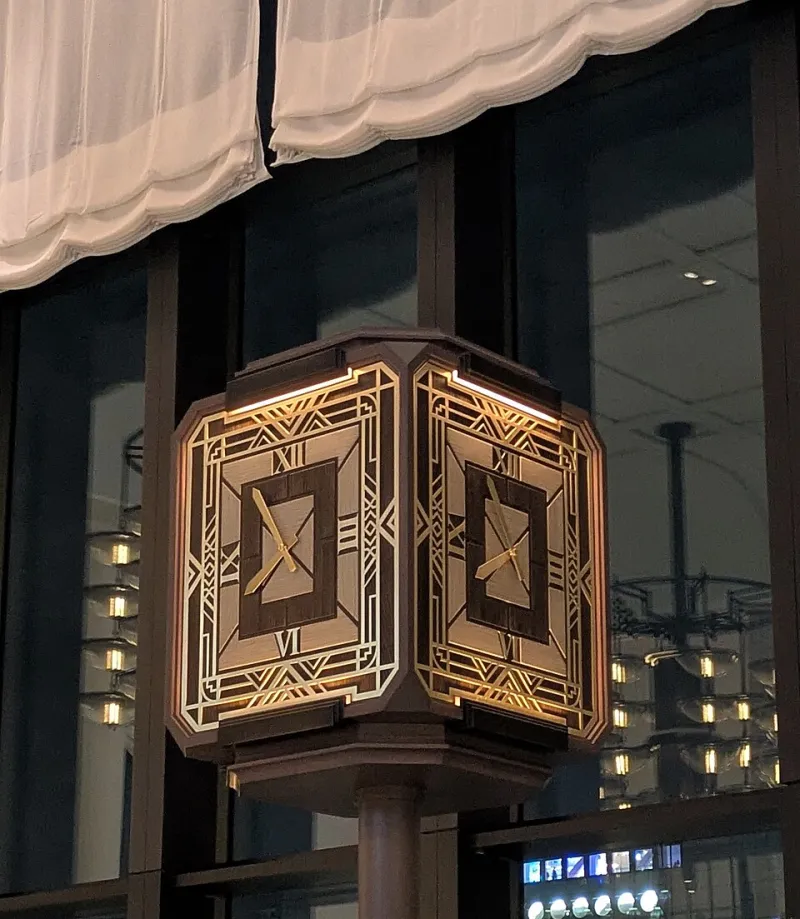
Photo: 織美左衛門, CC BY-SA 4.0, via Wikimedia Commons
Let me tell you about the moment Kansai broke my brain — in the best possible way.
I was standing in a narrow Osaka alley somewhere behind Shinsekai, holding a paper map a ramen shop owner had drawn for me on a napkin, looking at a building that appeared to be simultaneously a laundromat, a yakitori grill, and someone's actual living room. My phone's GPS had given up. The alley smelled like charcoal and motor oil. A tabby cat watched me from a rusted bicycle basket like I was the funniest thing it had seen all week.
And I thought: This is the best I've felt on this entire trip.
That feeling is the Kansai paradox. And once you understand it, you'll never navigate Japan — or honestly, travel anywhere — quite the same way again.
Tokyo Runs Like a Swiss Watch. Kansai Runs Like Your Favorite Dive Bar.
If you fly into Tokyo first (and most Americans do), Japan hits you like a beautifully engineered machine. Trains arrive to the second. Convenience stores are temples of quiet efficiency. Every tourist experience feels thoughtfully packaged, gently crowd-controlled, and optimized for maximum satisfaction with minimum friction.
It's genuinely impressive. It's also, after a few days, kind of exhausting.
Kansai — the region anchored by Osaka, Kyoto, and Kobe — operates on a different frequency entirely. Osaka locals will bump into you on the street and actually apologize out loud, which sounds normal until you realize nobody does that in Tokyo. Shop owners in Nishiki Market will argue good-naturedly with you about what you should be eating. A stranger on the Hankyu line might lean over and ask where you're from, then spend the next four stops telling you why their neighborhood's takoyaki is objectively better than the famous spots in Dotonbori.
This is not chaos. This is a culture that decided a long time ago that human friction is preferable to frictionless efficiency — and built an entire regional identity around that choice.
The Aesthetic of Keeping It Real
Here's what a lot of travel content won't tell you: Kansai is not always pretty in the ways travel photography suggests.
Parts of Osaka are genuinely gritty. Old shotengai shopping arcades have flickering fluorescent lights and vendors selling things that seem to have been there since 1987. Some of Kyoto's most interesting neighborhoods look nothing like the manicured temple postcards. Kobe has working port neighborhoods that smell like salt and diesel and feel more like a mid-century American harbor town than a Japanese tourist destination.
For travelers raised on the idea that a great trip means a curated feed of beautiful moments, this can feel disorienting at first. What it actually is, though, is honest. You're seeing a place that hasn't been staged for your arrival. The worn edges aren't a flaw in the experience — they're evidence that real life is happening here, and you've been let into it.
American travelers tend to get this faster than people from some other countries, maybe because we're used to cities that contain multitudes — the gleaming downtown and the crumbling corner store existing two blocks apart. Kansai speaks that language. It just speaks it in Japanese, with an Osaka accent.
What Unfiltered Communication Actually Sounds Like
Kansai's communication style deserves its own travel orientation, because it will throw you if you're not ready for it.
The stereotype — and it's rooted in something real — is that Kansai people, Osakans especially, say what they mean. They're warmer than their Tokyo counterparts, louder, more likely to crack a joke at your expense in a way that's completely affectionate. The elaborate social indirectness that defines a lot of Japanese communication gets dialed back here. You'll hear the word akan (no good, not happening, forget it) deployed casually and cheerfully in ways that would feel blunt anywhere else in Japan.
For Americans, this is actually a gift. We tend to be bad at reading the layers of polite deflection that Japanese social interaction sometimes requires. In Kansai, you often just... know where you stand. A shopkeeper who's delighted you walked in will show you they're delighted. A vendor who's sold out of what you wanted will tell you directly and probably suggest three alternatives before you've finished asking.
It's not rudeness. It's a region that decided clarity is its own form of respect — and interacting with people on those terms feels, for most American visitors, like a genuine relief.
Embracing the Detour as the Destination
Here's the practical upshot of all this, the thing that actually changes how you travel once Kansai gets into your head.
The best experiences in this region almost never appear on a top-ten list. They happen when you follow a smell down an alley, when you accept a recommendation from someone who doesn't speak your language but is clearly very invested in your lunch, when you sit down at a counter with no English menu and just point at whatever the person next to you ordered.
Kansai rewards travelers who are willing to be slightly lost, slightly confused, and completely open. It punishes — gently, without malice — the ones who are trying to execute a perfect itinerary. Not because anything goes wrong, exactly, but because the hyper-planned version of Kansai is a dramatically thinner experience than the one you get when you put the schedule down.
This is the backwards part that Tokyo-first travelers sometimes struggle with. In Tokyo, optimization works. The system is designed to be used efficiently, and using it efficiently is satisfying. In Kansai, optimization is beside the point. The system is designed for people, with all the messiness that implies, and the only way to use it well is to be a person — curious, flexible, willing to be surprised.
The Thing You'll Bring Home
Most travelers come back from Japan talking about the food, the temples, the trains. All of that is real and worth talking about. But the people who've spent real time in Kansai tend to come back talking about something harder to photograph.
They talk about the feeling of being in a place rather than moving through it. Of having a conversation they didn't plan. Of finding something worthwhile specifically because they stopped trying to find it.
Kansai doesn't teach you about Japan the way a museum teaches you about history. It teaches you the way a long conversation with a stranger teaches you about a person — incrementally, unexpectedly, in ways that only make sense later.
And if that sounds like a less efficient way to travel, you're right. It's also, once you've tried it, the only way that feels like it actually counts.