Better Than Restored: The Kansai Neighborhoods Where Old Buildings Got a Second Life
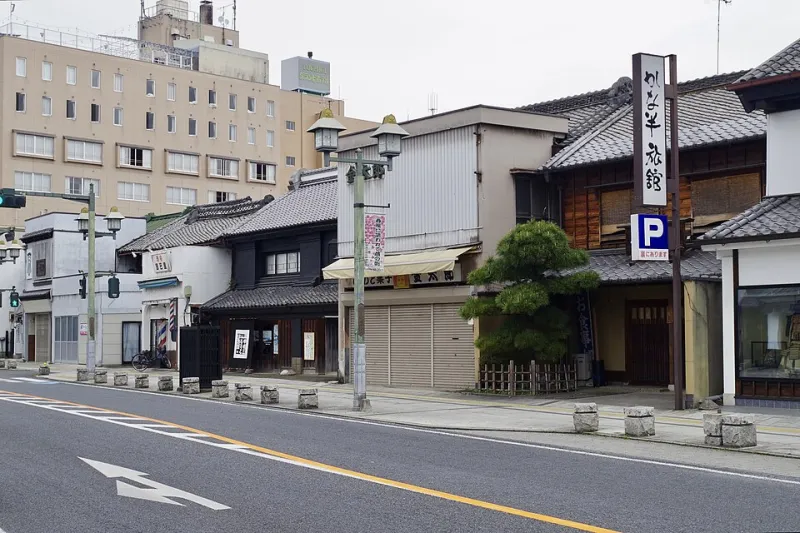
Photo: Uraniwa, CC BY-SA 4.0, via Wikimedia Commons
There's a version of historic preservation that makes old buildings feel like they've been laminated. Every rough edge smoothed, every crack filled, every surface refinished until the place looks less like it survived a century and more like a hotel lobby with exposed beams for atmosphere. You've probably walked through a few of those. You know the feeling — aesthetically pleasing, historically educational, completely inert.
Kansai is doing something different in certain corners, and it's worth going out of your way to find it.
What "Renovation" Actually Means Here
The Japanese word most commonly used for this kind of project is リノベーション (rinobēshon) — borrowed from English but carrying a slightly different cultural weight. In the Kansai context, rinobēshon tends to mean working with what's there rather than replacing it. Keep the stained concrete. Keep the industrial skylights. Keep the wooden beams that have been absorbing smoke and moisture for eighty years. Build around those things rather than covering them up.
The result is spaces that feel genuinely inhabited by their own history. A coffee shop where the counter is built into the original loading dock. A ceramics studio where the kiln sits in what used to be a factory floor. A record shop in a former sake warehouse where the old storage shelves now hold vinyl instead of barrels. These aren't design concepts. They're practical decisions made by people who couldn't afford to gut the building and liked what they found inside anyway.
That combination — necessity and aesthetic sensibility — tends to produce better results than either one alone.
Nakanoshima and the Western Edge of Osaka
Osaka's Nakanoshima island, wedged between the Dojima and Tosabori rivers, has been a commercial center since the Edo period. Its western end, away from the polished museum district, still has stretches of early 20th-century mercantile buildings that have been quietly colonized by architects, designers, and independent publishers over the past decade.
The scale here is human in a way that Osaka's main commercial corridors aren't. Three-story brick buildings with original iron window frames. Ground-floor galleries that used to be trading offices. A few of these spaces host rotating exhibitions; others are working studios where you can watch someone at a drafting table through the window if you happen to walk by at the right time.
This isn't a tourist district. There are no maps with little icons showing you where to go. That's the point. Walk west from the main Nakanoshima museum cluster and let the architecture change around you. When you see a building that looks like it shouldn't still be standing but clearly is, and there's a small handwritten sign in the window, go in.
Kyoto's Nishijin Fringe
Nishijin is famous for its weaving heritage — the neighborhood has been producing Nishijin-ori silk textiles since the 15th century — and parts of it have been appropriately designated and preserved and turned into cultural attractions. But the edges of Nishijin, particularly the blocks north of Imadegawa and east toward the Kamo River, are where the interesting reclamation is happening.
Old machiya townhouses that were too far gone for conventional renovation have been taken on by young architects and small collectives who stripped them back to their structural bones and rebuilt the interiors around whatever the original space demanded. One of the more striking examples is a former dye works that now operates as a combination natural dyeing workshop and plant-based café — the industrial sinks and drainage channels are still there, now used for soaking fabric rather than commercial production.
The neighborhood is still a working residential area, which means the renovated spaces exist alongside ordinary daily life. You'll walk past someone's laundry to get to a gallery. The gallery might be closed because the owner had something else to do that afternoon. This is not a failure of the experience. It is the experience.
Amagasaki's Industrial Southside
If Kyoto is the elegant end of Kansai's renovation story, Amagasaki is the raw one. The city sits between Osaka and Kobe, and its southern industrial waterfront spent most of the late 20th century in decline as the manufacturing economy contracted. What's left is a landscape of steel-frame warehouses, river-facing loading facilities, and factory buildings with the kind of structural bones that make architects and artists extremely interested.
A loose cluster of creative businesses has been establishing itself here for the better part of a decade, drawn by low rents and high ceilings. Metalworking studios. Screen printing operations. A small live music venue built inside a former parts warehouse with the original industrial shelving still running along the walls. The aesthetic is genuinely rough — this isn't Brooklyn-warehouse-chic, where the roughness is curated. It's just what was there.
Amagasaki is a thirty-minute train ride from central Osaka on the JR Tōzai Line and receives a fraction of the tourist attention of its neighbors. For now.
Why These Places Feel More Real
There's a concept in Japanese aesthetics — wabi-sabi — that gets invoked constantly in travel writing about Japan, sometimes accurately, often not. At its core, it's about finding value in impermanence and imperfection, seeing the wear on something as evidence of its life rather than its decline.
The renovation districts of Kansai aren't wabi-sabi as a design choice. They're wabi-sabi as a practical outcome of people working with limited resources on buildings that have genuinely lived long lives. The cracks are real cracks. The patina is actual patina. Nobody installed distressed wood flooring — the floor was just already like that.
For American travelers who've grown up in a built environment that tends to favor the new over the old and the polished over the worn, these neighborhoods can feel almost startling. Not because they're exotic, but because they're honest. The building has been here longer than you have. It shows. That's allowed.
Getting There Before the Crowds Do
All three of these areas — Nakanoshima's west end, Nishijin's fringe blocks, and Amagasaki's southside — are accessible by public transit and require no special access or advance booking. They're also, for now, genuinely under-visited by international tourists.
That will change. It always does. But right now, you can walk into a former warehouse in Amagasaki on a Tuesday afternoon and be the only person there who didn't arrive by bicycle from the neighborhood. That window doesn't stay open forever.
Go while the signs are still handwritten.