The Most Efficient Train System in the World Is Quietly Wrecking Your Kansai Vacation
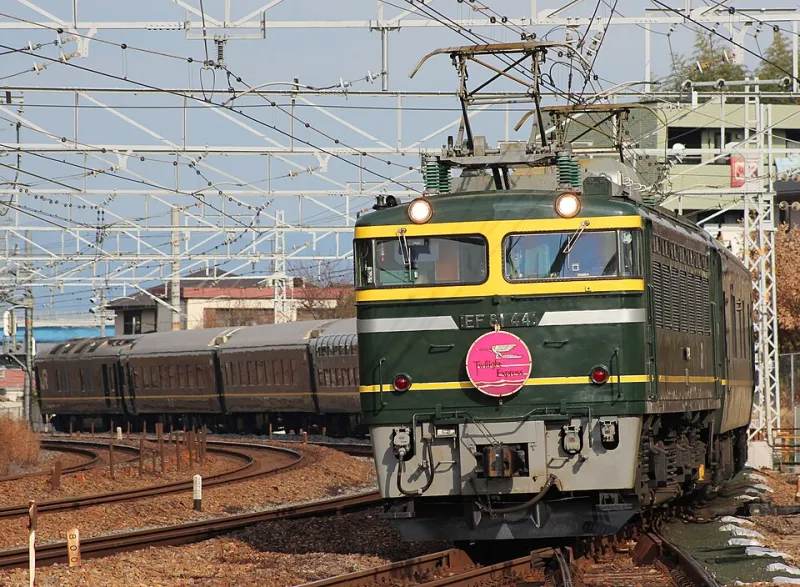
Photo: Rsa, CC BY-SA 3.0, via Wikimedia Commons
Let's start with something that sounds insane: the thing you're most impressed by in Kansai might also be the thing that's making your trip worse.
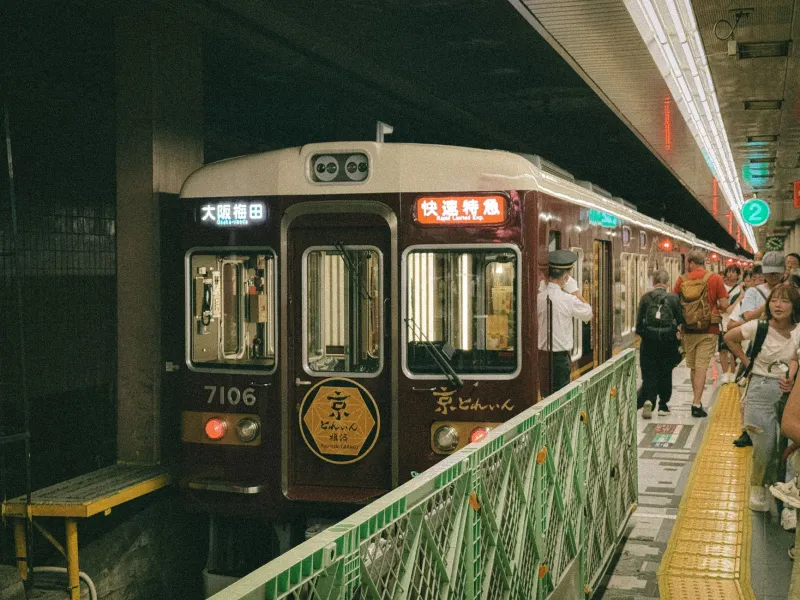
You've probably already noticed it. The trains here don't just run on time — they run with the kind of precision that makes American transit look like a suggestion. The Hankyu Kyoto Line. The Osaka Metro. The Kintetsu network threading through Nara and beyond. Departure boards tick down to the second. Conductors bow before closing doors. Platforms are silent, organized, and weirdly calming.
And here's the trap: that efficiency feels like a gift, so you start using it like one. You build itineraries around it. You schedule Fushimi Inari at 9 a.m., Nishiki Market by noon, Arashiyama by 3, back to Osaka by 7. The trains make it all technically possible. So you do it. And somewhere around day three, you realize you've covered a lot of ground without actually going anywhere.
The Itinerary Is the Problem
When transit is this good, it creates a particular kind of tourist behavior. You start thinking about your trip the way you think about a connecting flight — every moment is optimized against the next one. Miss the 2:14 to Kyoto and the whole day collapses. So you run. You check your phone. You eat standing up. You take a photo of a temple gate and immediately start walking toward the exit because the next stop closes at five.
The irony is brutal. You came to Kansai, one of the most layered, historically dense, genuinely strange corners of the planet, and the trains have turned you into someone who's mostly just good at not missing trains.
This isn't a knock on the infrastructure. It's a knock on how we respond to it.
What Happens When You Miss One on Purpose
Try this once. Pick a day — ideally not your first or last — and decide in advance that you're going to miss a train. Not because you're lost. On purpose. Stand on a platform somewhere between Osaka and Kyoto, watch your train leave without you, and then walk out of the station in whatever direction looks least like a tourist corridor.
What you'll find, almost immediately, is that Kansai has been waiting for you to do exactly this.
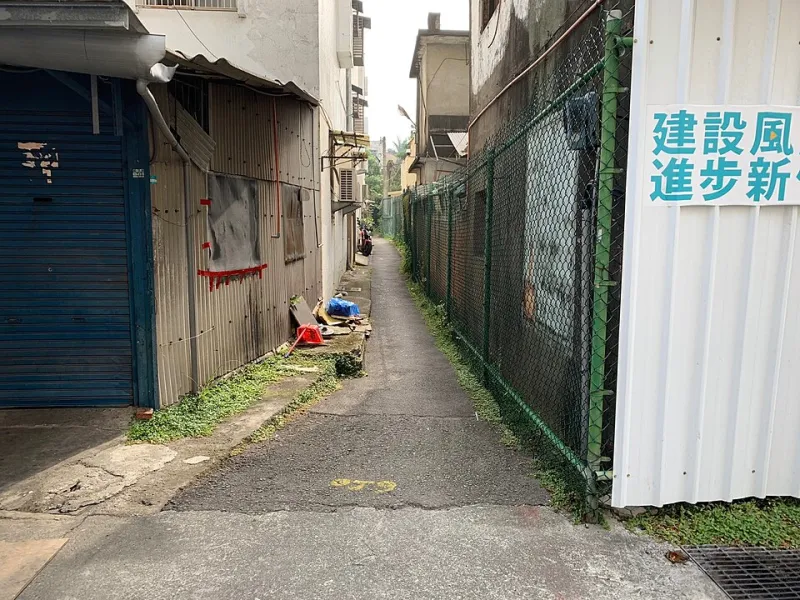
The neighborhoods that press up against the train lines — the ones you've been passing through at 60 miles per hour — are full of stuff that doesn't appear on any highlight reel. A covered shotengai arcade where a woman has been selling pickled vegetables from the same corner stall for thirty years. A tiny ramen counter with four seats and no English menu and a cook who will absolutely help you figure it out. A shrine that's not on any list, wedged between a laundromat and a dry goods store, where an older man is raking gravel in the kind of focused silence that makes you want to sit down and stop talking.
None of this was on your itinerary. All of it is the point.
The Chaos Is the Culture
Kansai has a reputation in Japan for being the louder, messier, more unpredictable counterpart to Tokyo. Osaka especially — it's a city that wears its contradictions openly. Ancient shotengai markets running under elevated expressways. Pachinko parlors next to centuries-old confectionery shops. Street food vendors who'll argue with you in Osaka dialect and then give you extra for free.
This texture doesn't show up when you're moving fast. It only reveals itself when you're standing still long enough to notice it, or when you've taken a wrong turn down a covered alley and ended up somewhere you didn't plan to be.
The train system, for all its magnificence, is also a kind of filter. It routes you between the places everyone already knows about. The gaps between those places — the ten-minute walks, the wrong exits, the streets that don't go where you expected — that's where Kansai actually lives.
A Different Way to Use the Trains
None of this means you should abandon the network entirely. That would be its own kind of mistake. The trains are genuinely one of the great pleasures of traveling in this region — clean, quiet, punctual in ways that feel almost philosophical. But there's a difference between using them as a tool and letting them run your whole trip.
Here's a reframe that works: instead of building your day around train times, build it around neighborhoods. Pick one area — Shinsekai in Osaka, Fushimi in Kyoto, the backstreets around Namba — and decide you're going to stay there until something interesting happens. Not until you've checked off the landmarks. Until something actually happens.
Then take the train home whenever you feel like it. There'll be another one in four minutes.
The Train Can Wait. The Moment Can't.
There's a particular kind of travel anxiety that the Kansai rail system feeds without meaning to. Because the trains are so reliable, you start to feel like any deviation from the plan is a failure. You're not exploring — you're falling behind.
But consider what you're actually competing against. An itinerary you made at home, on a laptop, based on other people's itineraries. It has no idea what day it is in Kansai. It doesn't know that it's raining and the covered arcade near Tenjinbashisuji is suddenly the coziest place in the city. It doesn't know that a festival prep crew is setting up paper lanterns on a side street in Gion right now and you're about to walk past it if you don't stop.
The trains will keep running. They'll be on time tomorrow and the day after that. The thing happening in front of you right now is the only thing with an actual departure time.
Let the System Work For You, Not On You
Kansai's transit network is a genuine wonder. Use it to get to neighborhoods you'd never reach otherwise. Use it to hop between cities without renting a car. Use it to stay out late in Osaka and still make it back to your ryokan in Kyoto before midnight.
Just don't let it schedule your curiosity. The best stuff here — the ramen counter, the gravel shrine, the old woman with the pickles — it's all happening in the spaces between the stops. And it's been there the whole time, just waiting for you to miss your train.