Stop Doing Stuff: How Kansai's Empty Moments Are the Whole Point
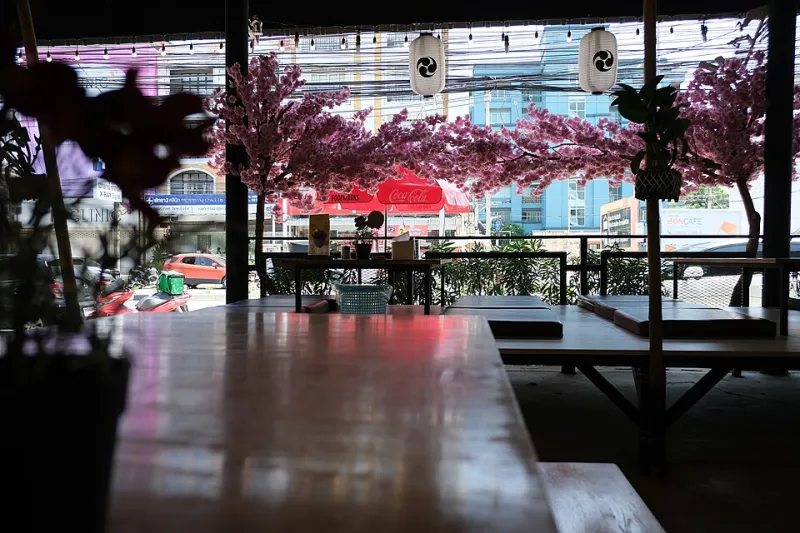
Photo: PattayaPatrol, CC BY-SA 4.0, via Wikimedia Commons
You've got the spreadsheet. Twelve tabs. Color-coded by neighborhood, sorted by opening hours, cross-referenced with two different YouTube travel vlogs and a Reddit thread from 2022. You are ready.
And somewhere between temple number four and the ramen shop with the forty-minute wait, Kansai is going to try to tell you something — quietly, the way it tells everyone — and you are going to miss it completely because you're already checking what's next.
This isn't a guilt trip. It's an invitation. Because there's a concept baked into Japanese aesthetics called ma (間), and once you understand it even a little, you start seeing the whole region differently.
What Ma Actually Is (And Why It's Not Just 'Doing Nothing')
Ma doesn't translate cleanly into English, which is part of why Americans tend to brush past it. The closest approximation is something like negative space — the pause between musical notes, the gap between objects in a room, the silence at the end of a sentence that gives the words room to land.
In Japanese art, architecture, and daily life, ma isn't emptiness that needs filling. It's emptiness that does something. The space between the stones in a Kyoto garden path isn't wasted stone — it's where your eye rests. The quiet stretch of an afternoon in a neighborhood café isn't dead time — it's the texture of a place revealing itself.
For travelers raised in a culture that measures trip quality by how much got done, this is a genuinely foreign idea. And Kansai is one of the best places on earth to let it rearrange your thinking.
The Train Station Bench as Cultural Document
Here's a small experiment worth trying: the next time you're at a major station — Osaka's Umeda, Kyoto Station's vast central hall, or even a mid-sized stop like Namba or Kawaramachi — find a bench and sit on it for twenty minutes without your phone out.
Not as a meditation exercise. Just as observation.
Watch how people move. Notice how rarely anyone bumps into anyone else despite the density. See how a grandmother navigates a rolling suitcase through a crowd with a kind of unhurried efficiency that shouldn't be possible. Notice the way a salaryman sits with his lunch, not scrolling, not rushing — just eating, looking at nothing in particular, being exactly where he is.
Kansai's train stations are masterclasses in collective spatial awareness. People here have internalized ma in the most practical sense: they know how to occupy space without colonizing it. Sitting still long enough to notice this isn't a waste of sightseeing time. It is the sightseeing.
The Parks Nobody Puts on the List
Kyoto's famous gardens — Ryoanji, Kokedera, the strolling garden at Shinjuen — are worth every bit of their reputation. But they're also full of other tourists, which changes the quality of stillness available to you.
The parks that don't make the top-ten lists are a different experience entirely.
Take Nishiki Tenmangu's small courtyard just off the chaos of Nishiki Market — easy to miss, almost always quiet. Or the stretch of riverside path along the Kamo River between Sanjo and Shijo bridges in the early morning, before the joggers arrive in force. Or any of Osaka's smaller neighborhood parks on a weekday afternoon, where retired men play gateball and pigeons do whatever pigeons do.
These places aren't photogenic in the Instagram sense. They won't get you likes. What they'll get you is a genuine read on how people in this region actually spend unhurried time — and that's a kind of cultural data that no famous attraction can give you.
Sit. Watch the light. Notice what people bring with them to a park bench. Notice what they don't bring.
Small Cafes and the Slow Art of Staying
Kansai has a deep café culture that doesn't always make the tourist radar because it's not trying to. Not the third-wave specialty coffee spots designed to be photographed (those exist and are great) — the kissaten, the old-school coffee houses that have been serving the same blend since the 1970s and expect you to sit with it for a while.
In a kissaten, ordering one coffee and staying for ninety minutes is not just acceptable — it's kind of the point. The owner isn't hovering. Nobody's waiting for your table. The music is usually something gentle and slightly dated. There's a particular quality of afternoon light in these places that feels like it belongs to a slower decade.
For American travelers who feel guilty about 'wasting time' in a café when there are temples to see, this is worth reframing. You are not hiding from Kansai in a coffee shop. You are sitting inside one of its oldest social rituals. The unhurried hour you spend watching a neighborhood move past a kissaten window is as authentically Kansai as anything on your itinerary.
Giving Yourself Permission to Pause
The hardest part isn't finding the quiet spots. Kansai is full of them — a stone garden edge with a good view, a covered shopping arcade on a Tuesday afternoon, a temple sub-garden that charges no admission and sees maybe twelve visitors a day. The hard part is deciding, actively, that being in them counts.
American travel culture has a complicated relationship with stillness. We tend to treat rest as something you earn after doing enough, not something that's inherently valuable. A trip with empty hours in it can feel like a trip that failed to optimize.
But here's what the concept of ma actually suggests: the empty space isn't the absence of meaning. It's what makes the meaning of everything around it legible.
The famous temples hit harder when you've spent a morning doing nothing much in a neighborhood park first. Kyoto's visual language — the layered rooflines, the gravel raked into careful geometry, the way a stone lantern sits in relation to a maple — makes more sense when you've slowed down enough to notice how space is being used intentionally everywhere, not just in famous gardens.
A Practical Note for the Spreadsheet People
You don't have to scrap the itinerary. Just build in one unscheduled hour per day with a simple rule: no famous attractions, no restaurants you've already researched, no destinations. Find a bench, a café, or a riverside path, and stay until you feel like leaving.
That's it. That's the whole practice.
Kansai will fill the hour. It always does — just not in ways you could have planned for.